Hey there, business trailblazers! So, you’ve embarked on the thrilling journey of running a small business, but have you thought about what could keep your enterprise safe from unexpected bumps along the road? That’s where small business insurance swoops in like a guardian angel, ensuring your hard-earned venture stays afloat amidst storms.
Picture this: navigating the plethora of insurance options might seem daunting, but understanding the core coverage types is crucial. From guarding your business assets to safeguarding your team, these insurance types are the unsung heroes of your entrepreneurial saga. Let’s dive in and uncover the armor your business needs!
Overview of Small Business Insurance
Did you know that 40% of small businesses without insurance never reopen after a disaster? That’s a staggering number! Small business insurance isn’t just a safety net; it’s a lifeline.
As a business owner, you face unique risks every day. From unexpected lawsuits to property damage, these hurdles can knock you off course. Small business insurance offers a range of protections precisely for these challenges.
Types of Small Business Insurance
There are several kinds of insurance out there, and picking the right one can be overwhelming. Here’s the deal: you need to know the most common types to make an informed decision. First, there’s General Liability Insurance—it covers claims of bodily injury or property damage. Then you have Professional Liability Insurance, crucial for businesses offering expert advice. And don’t forget Property Insurance, which protects your physical assets.
Protecting Business Assets and Employees
Imagine your office gets flooded. Without insurance, replacing all those computers and furniture could bankrupt you. Business insurance protects these assets so you can focus on growth. But what about your team? Workers’ Compensation Insurance covers medical expenses and lost wages if an employee gets injured at work.
Pro Tip: Consider a Business Owner’s Policy (BOP). It bundles different types of insurance into one, often at a reduced cost.
Types of Small Business Insurance
Did you know that *40% of small businesses* will incur a property or liability loss in the next 10 years? That’s a staggering statistic. But the good news is, you can safeguard your business with the right insurance.
Understanding which type of insurance to choose can be a game-changer. Here are three essential types you need to know about.
General Liability Insurance
General Liability Insurance is *the backbone* of your business coverage. It protects you from a range of potential mishaps. Think of it as your first line of defense.
- Protects against claims of bodily injury or property damage.
- Covers legal fees if someone sues your business.
- Essential for businesses with physical premises visited by clients.
Pro Tip: Always check the limits of your liability coverage to ensure it matches your business needs.
Professional Liability Insurance
If you provide services or advice, Professional Liability Insurance is *non-negotiable*. Also known as Errors and Omissions insurance, it’s there to keep you covered in case your expertise is challenged.
- Protects against claims of negligence or inadequate work.
- Covers legal costs even if a claim is unfounded.
- Vital for consultants, accountants, and specialists.
Property Insurance
Property Insurance is about *securing your assets*. This type covers your building and its contents against a host of potential threats. If you own or lease a workspace, this insurance is a must-have.
- Covers damage from events like fire, theft, and vandalism.
- Includes coverage for inventory and equipment.
- Can be customized to cover natural disasters in certain regions.
Here is the deal: Having an all-inclusive property insurance policy can save you from unexpected financial burdens.
Commercial Insurance Coverage

Did you know that 40% of small businesses never reopen after a disaster? It’s scary, but that’s where commercial insurance steps in. This coverage is your safety net, protecting against unforeseen events that could otherwise cripple your business.
Here’s the deal: commercial insurance covers a lot more than just property damage. It shields you from financial losses due to various perils, like lawsuits or employee injuries. Understanding the different types of coverage can be a game-changer for your business.
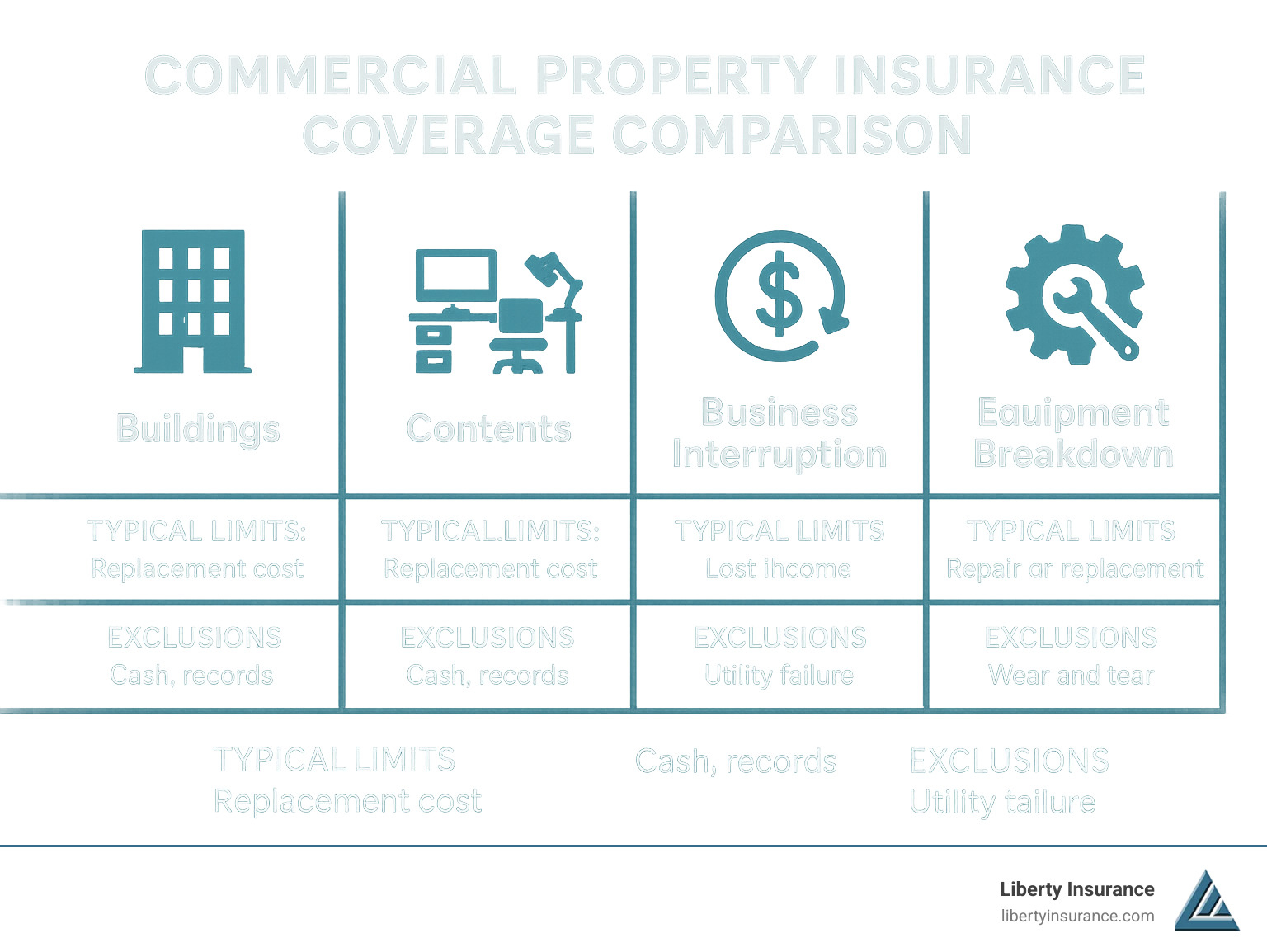
Coverage Options and What They Protect Against
Commercial insurance isn’t one-size-fits-all. You need the right mix to suit your business. Let’s break down the primary types:
| Coverage Type | What It Protects | Who Needs It |
|---|---|---|
| Property Insurance | Buildings, equipment, inventory | Businesses with a physical location |
| Liability Insurance | Lawsuits, legal costs | All businesses |
| Workers’ Compensation | Employee injuries, medical expenses | Businesses with employees |
| Business Interruption | Lost income, temporary relocation | Retailers, restaurants |
| Cyber Liability | Data breaches, cyberattacks | Online businesses |
Pro Tip: Regularly review and update your insurance policies to match your changing business needs. This ensures you’re not overpaying for unnecessary coverage or underinsured against potential risks.
Step #1: Identify your business’s unique risks. Step #2: Match those risks with the appropriate coverage. It’s that simple. BUT remember, the cost of not having the right insurance could be your biggest expense.
Selecting Business Insurance Providers
Think finding the right insurance provider is easy? Think again. Choosing the wrong one could cost you big time.
Many small businesses make the mistake of picking the first insurance company they come across. But not all providers are created equal. You need a reliable partner who can cover your risks without breaking the bank.
Criteria for Selecting a Reliable Insurance Provider
Start by looking at the provider’s reputation. How long have they been in business? Check out reviews and ratings to get a sense of customer satisfaction. You wouldn’t want to partner with someone who can’t keep their clients happy.
Next, assess their financial stability. An insurance provider should have the financial muscle to cover large claims. Look at their credit ratings from agencies like Moody’s or A.M. Best.
Lastly, consider their customer service. You want a provider that answers your questions promptly and provides great support when you need it most.
Step-by-Step Guide to Evaluate Insurance Policies and Providers
Here’s how you can ensure you’re picking the right provider:
- Identify your business risks: Every business is different. Know what specific risks you need coverage for.
- Compare policy options: Don’t just look at the price. Evaluate the coverage limits and exclusions.
- Review policy terms: Make sure you understand the fine print. Clauses can make or break your coverage.
Pro Tip: Always ask for a sample policy document before signing up.
Questions to Consider Before Choosing an Insurance Provider
Before you pull the trigger on an insurance provider, ask yourself these questions:
- What is their claims settlement ratio?
- Do they offer custom policies for my business type?
- How accessible is their customer support?
- Are there any hidden fees?
- What’s their policy on premium hikes?
Asking these questions will help you make a more informed decision. Never hesitate to dig a little deeper when it comes to protecting your business.
Cost Factors in Business Insurance

Did you know that 40% of small businesses never reopen after a disaster? This is why having the right insurance is crucial. But, how do you know how much it should cost?
The cost of business insurance can vary widely depending on several key factors. Business size, industry type, and location are major players in determining your premiums. Let’s break it down.
Business Size and Its Impact on Insurance Costs
Large businesses often pay more for insurance. Why? Because the risks are higher with more employees and larger operations. A small tailor shop might pay a fraction of what a manufacturing plant would. It’s all about the potential risk and exposure.
Industry Type and Associated Risks
Insurance providers assess risk based on your industry. If you’re in construction, expect higher premiums due to the physical risks. But if you run a consulting firm, the risks might be lower, leading to reduced costs. It’s essential to understand how your industry’s risk profile affects your insurance.
Location Influences on Premiums
Your business’s geographical location can significantly impact your insurance costs. For example, businesses in areas prone to natural disasters may pay more. Similarly, urban businesses might face higher premiums due to increased crime rates. Consider your location’s unique challenges.
Estimating Your Insurance Costs
Here’s the deal: Estimating your insurance costs doesn’t have to be a mystery. By understanding the basic factors, you can make an educated guess. Let’s look at a simple example:
| Factor | Low Impact | Medium Impact | High Impact |
|---|---|---|---|
| Business Size | $500 | $1,500 | $3,000 |
| Industry Type | $800 | $2,000 | $4,000 |
| Location | $300 | $1,000 | $2,500 |
Pro Tip: Compare quotes from at least three insurers to ensure you’re getting the best deal for your business needs.
Remember, these numbers are illustrative. They give you a ballpark figure to start with. Always consult with an insurance expert to tailor the quote to your specific situation.
Case Studies and Success Stories
Did you know that 75% of businesses are underinsured? That’s a staggering number of small businesses at risk. But what’s the real impact when the right insurance saves the day?
Let’s dive into how real businesses benefitted from having the right coverage. These success stories show how being prepared isn’t just smart—it’s crucial.
Small Bakery Bounces Back After Fire
Imagine this: a small bakery in a bustling neighborhood catches fire and sustains extensive damage. Disaster, right? BUT thanks to comprehensive fire insurance, the bakery was able to cover $50,000 in damages and reopen in just a month. The owner stated,
“Without our insurance, we’d have been toast—literally. It saved my business and my peace of mind.”
This story shows the importance of having adequate coverage tailored specifically to your business’s risks.
Tech Startup Survives Data Breach
Data breaches can devastate a company. One tech startup learned this the hard way when hackers accessed their customer database. BUT they had cyber liability insurance in place. This insurance covered legal fees, notification costs, and even customer credit monitoring.
“Our insurance was our safety net. It helped us retain our customers’ trust and kept us afloat,” remarked the CTO.
Without this specialized insurance, the startup might have gone under.
Retail Store’s Theft Coverage Pays Off
A family-owned retail store experienced a major theft. The loss was substantial, but their comprehensive theft insurance covered the stolen inventory and the damage caused to the store.
“It was a nightmare turned manageable. We were back in business in no time,” shared the owner.
Here is the deal: having theft insurance not only replaced lost goods but also restored the business’s financial health.
These examples demonstrate how having the right insurance can make a world of difference. Be proactive and ensure your business is covered.
Last Word
And there you have it! Navigating the realm of small business insurance may seem overwhelming, but remember, it’s not just about ticking boxes. It’s about crafting a safety net that aligns with your business dreams. Invest wisely and let your business soar with confidence, knowing it’s safeguarded against life’s unforeseen twists and turns. Here’s to your continued success, fortified by the right insurance!
Common Queries
What are the three main types of small business insurance?
The three main types are General Liability, Professional Liability, and Property Insurance, each catering to different protection needs.
How does General Liability insurance protect my business?
General Liability insurance covers third-party claims involving bodily injury, property damage, and personal or advertising injury.
Why is Professional Liability insurance important?
Professional Liability insurance protects against claims of negligence, errors, or omissions in the services your business provides.
What does Property Insurance cover?
Property Insurance safeguards your business assets, including buildings, equipment, and inventory, against damage or loss.
How do I choose the right insurance provider for my small business?
Look for a provider with a good reputation, financial stability, and tailored policies that fit your specific business needs.
